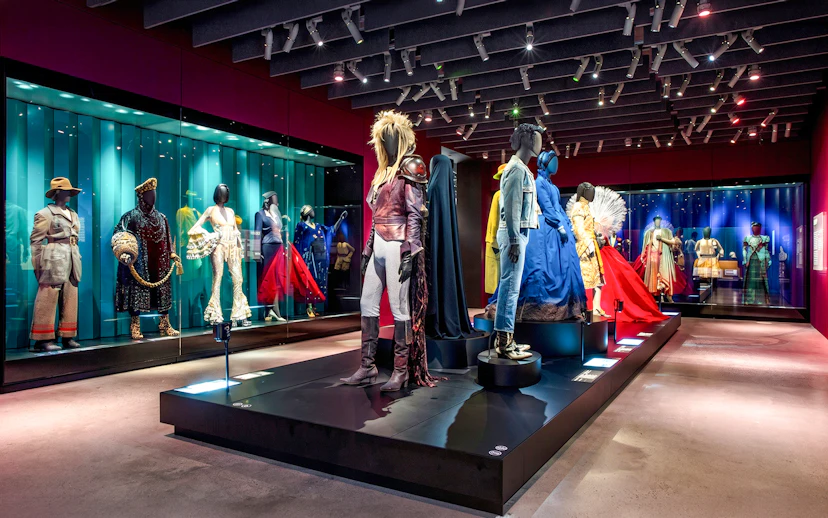
Academy Museum of Motion Pictures visitor guide
The Academy Museum of Motion Pictures is Los Angeles's major film museum, best known for its Oscar connection, screen-used artifacts, and striking Renzo Piano-designed building. This is a large, multi-floor visit rather than a quick pop-in, and the experience is best when you pace it around the core galleries instead of wandering aimlessly between floors. The biggest difference between a satisfying visit and a flat one is timing your route and expectations around rotating closures, timed entry, and the short Oscars Experience add-on.
Quick overview: Academy Museum of Motion Pictures at a glance
If you've already decided to visit, these are the details that will shape your day most.
- When to visit: Wednesday to Monday, 10am–6pm; the museum is closed on Tuesdays. Weekday mornings are noticeably calmer than Friday and weekend afternoons, because timed midday slots and same-day screenings draw more local traffic later in the day.
- Getting in: From $25 for standard adult entry, with Last Looks late entry from $18 and the Oscars Experience add-on from $10. Advance booking matters most on weekends, during major temporary exhibitions, and around Oscars season, when timed slots help but don't eliminate lines.
- How long to allow: 2–3 hours for most visitors. Special exhibitions, free drop-in tours, and the Oscars Experience push visits toward the longer end.
- What most people miss: The free 13-minute Spielberg Family Gallery film montage in the lobby and the museum's free drop-in educator tours both add more context than many first-time visitors expect.
- Is a guide worth it? Yes, if you want context in the core cinema galleries or themed exhibitions; otherwise, the official audio app and a self-guided route are enough for most visitors.
Jump to what you need
🕒 Where and when to go
🗺️ Getting around
♿ Facilities and accessibility
Where and when to go
How do you get to the Academy Museum?
The museum sits on Wilshire Boulevard in Los Angeles's Miracle Mile, next to other major cultural institutions and easy to pair with the LACMA area.
Address: 6067 Wilshire Blvd, Los Angeles, CA 90036, United States | Find on Maps
- Rideshare/taxi: Use the street-level arrival point at the museum entrance for the simplest drop-off.
- Driving: Paid parking is usually handled in neighboring garages rather than at a dedicated on-site lot.
- Parking note: If you're driving, allow extra time to locate the correct garage signage around the LACMA and Wilshire corridor.
Which entrance should you use?
The museum uses one main public entry, and the mistake most visitors make is assuming a timed ticket means no wait once they arrive. You still need to clear security and ticket scanning.
- Pre-booked timed tickets: For general admission visitors. Expect roughly 10–20 min waits off-peak and 30–45 min on busier afternoons.
- Same-day ticket/will-call line: For on-site purchases and add-on collection. Expect the slowest waits on weekends, Fridays, and during major exhibitions.
When is the Academy Museum of Motion Pictures open?
- Wednesday–Monday: 10am–6pm
- Tuesday: Closed
- Last Looks late entry: Discounted same-day entry from 4:30pm
When is it busiest? Fridays, weekends, and mid-afternoon timed slots tend to feel busiest, especially when screenings or major temporary exhibitions draw extra local traffic.
When should you actually go? Arriving close to opening on a weekday gives you the easiest start, lighter security waits, and more breathing room in the core galleries before the midday ticket wave builds.
How do you get around Academy Museum of Motion Pictures?
The museum is a multi-level indoor museum split between the restored May Company building and the newer dome wing, so it feels more sprawling than many first-time visitors expect. In practice, it is easy to self-navigate if you stay focused, but just as easy to miss the free lobby experience or leave the theater spaces until too late.
- Spielberg Family Gallery: Free lobby montage space near the main arrival area → budget 15 min.
- Stories of Cinema galleries: The core multi-floor museum sequence on the art and history of filmmaking → budget 90-120 min.
- Oscars Experience: Separate paid add-on on Level 3 → budget 15-20 min.
- David Geffen Theater: The 939-seat dome theater for screenings and programs rather than standard gallery browsing → budget varies by event.
Suggested route: Start with the free lobby montage, then go straight into the Stories of Cinema galleries before deciding whether to add the Oscars Experience or theater time, because most visitors leave the free intro film until the end and then skip it entirely.
Gallery layout
The museum is spread across multiple levels in the restored May Company building, with the dome theater wing and add-on experiences feeling like separate stops rather than one seamless loop. In practice, that means you'll get more from the visit if you choose a route early instead of zigzagging between floors.
- Spielberg Family Gallery: Free lobby-level 13-minute montage installation that sets the tone for the visit → budget 15–20 min.
- Stories of Cinema galleries: The core multi-floor exhibition on moviemaking, film history, and major artifacts → budget 60–90 min.
- Oscar-related galleries: Statuettes, ceremony history, and awards context that many visitors specifically come for → budget 20–30 min.
- Oscars Experience / theater spaces: Add-on interactive stage moment and screening venues in the broader complex → budget 20–30 min for the add-on, longer for screenings.
Suggested route: Start with the free Spielberg Family Gallery montage, then move straight into Stories of Cinema before your energy drops. Save the Oscars Experience for later, because it works better as a final novelty stop than as the anchor of the visit.
Maps and navigation tools
- Map: Use the museum's on-site materials and official app support to orient yourself before you move beyond the lobby.
- Signage: Wayfinding is workable, but the split between the historic building and theater/dome spaces makes it easier than expected to miss a floor or backtrack.
- Audio guide/app: The official audio tour app is useful here because it gives structure to a museum that can otherwise feel visually impressive but unevenly paced.
💡 Pro tip: Watch the free lobby montage first and decide your route right after it. Many visitors rush upstairs and only later realize they've skipped the cleanest introduction to the whole museum.
Where are the masterpieces inside Academy Museum of Motion Pictures?

Spielberg Family Gallery
Attribute — Space: Free public lobby installation
This 13-minute film montage is one of the smartest first stops in the building because it grounds the whole museum in cinema rather than memorabilia alone. Most visitors treat it like a pass-through space, but it works better as your reset point before committing to the upper galleries. The part many people rush past is that you don't need a full museum visit mindset to appreciate it.
Where to find it: In the main lobby area, before moving deeper into the gallery route
Stories of Cinema
Attribute — Exhibition type: Core permanent-style multi-floor exhibition
This is the heart of the museum and the place to slow down, because it does the real work of connecting film artifacts to the craft behind them. It rewards patience more than speed, especially if you're interested in how movies are made rather than just spotting famous objects. What many visitors miss is that wandering without a plan makes these galleries feel thinner than they are.
Where to find it: Across the main museum gallery floors above the lobby
Oscar history galleries
Attribute — Theme: Academy Awards history and statuettes
If you're here for the Oscars connection, this is the section that pays off the museum's branding most directly. It gives you the clearest link between Hollywood mythology and the Academy's institutional role, and it's usually one of the most memorable stops for first-time visitors. What people often underestimate is how much better it lands after you've already done some of the broader cinema galleries.
Where to find it: Within the main gallery route in the museum's awards-focused exhibition areas
Iconic film artifacts
Attribute — Collection type: Screen-used props and costumes
The museum's strongest crowd-pleasers are still the recognizable pieces — the kind of objects that turn a general film-history visit into something personal. Visitors regularly single out major props and costumes because they provide instant emotional payoff after the more interpretive displays. The easy mistake is to speed through once you've spotted the headline object and miss the surrounding context that explains why it matters on screen.
Where to find it: Throughout the core galleries, especially within Stories of Cinema and major exhibition rooms
Oscars Experience
Attribute — Experience type: Interactive add-on stage experience
This is the museum's most theatrical stop and the one that splits opinion most sharply. If you want a playful Hollywood memory, it delivers; if you're expecting a deep exhibition, it feels more like a quick novelty than a gallery. What most adults don't realize until they're there is how short it is, so it works best as an add-on rather than the reason to visit.
Where to find it: Level 3, in the dedicated Oscars Experience space
David Geffen Theater and dome wing
Attribute — Space: 939-seat theater in Renzo Piano's spherical addition
Even if you're not attending a screening, this part of the complex helps explain why the building matters architecturally as much as curatorially. The contrast between the restored department-store structure and the glassy dome is part of the visit's identity. Many visitors focus so hard on the artifacts that they don't pause to take in the architecture as one of the museum's real highlights.
Where to find it: In the museum's newer dome wing connected to the main complex
Facilities and accessibility
- 🎬 Theaters: The museum includes a major theater complex, including the 939-seat David Geffen Theater, for screenings and special programs.
- 🍽️ Café: There is an on-site café, which makes it easier to stay inside for a full 2–3 hour visit.
- 🛍️ Gift shop/merchandise: Visitors exit through the gift shop area, making it the easiest place to pick up film-themed souvenirs at the end.
- 🪑 Seating/rest areas: Theater areas and lobby spaces give you better built-in rest stops than many museums of this size.
- 🛗 Elevators and escalators: Both are part of the main visitor flow between the lobby and upper gallery levels.
- 🎥 Free lobby installation: The Spielberg Family Gallery film montage is available in the public lobby and works well as a low-effort first stop before a full visit.
- ♿ Mobility: Elevators connect the museum's multi-floor layout, which is important because this is a large vertical visit rather than a single-floor museum.
- 🧠 Cognitive and sensory needs: Weekday mornings are the least overwhelming window, while film installations and theater spaces can feel more intense than the quieter artifact galleries.
- 👁️ Visual impairments: The official audio tour app adds context and structure, which helps in galleries where interpretation matters as much as the objects themselves.
- 👨👩👧 Families and strollers: The building layout is manageable with elevators, but the content skews older and more interpretive than many parents expect, so very young children may lose interest quickly.
The museum works best for movie-curious school-age children, older kids, and teens who can connect props, clips, and Oscar lore to films they already know.
- 🕐 Time: Around 1.5–2 hours is often the sweet spot with younger children, focusing on recognizable props and the most visual galleries.
- 🏠 Facilities: The café, seating areas, and theater-adjacent spaces help break up a visit that can otherwise feel long for children.
- 💡 Engagement: Turn the visit into a prop hunt; kids usually respond better to spotting famous objects first and then dipping into the context around them.
- 🎒 Logistics: Book a weekday morning slot if you can, keep the route short, and only add the Oscars Experience if your child will enjoy the staged photo-video moment.
- 📍 After your visit: LACMA's outdoor areas are the easiest nearby follow-up if you want a second stop without crossing town.
Rules and restrictions
What you need to know before you go
- Entry requirement: General admission uses timed entry, and the Oscars Experience requires its own add-on ticket plus same-day museum admission.
- Age policy: Children and teens up to the age of 17 years enter free, while adult, senior, and student tickets are paid.
- Bag and security: All visitors should expect security screening on arrival, and larger bags can slow entry even when you already hold a timed ticket.
Not allowed
- 🚫 Skipping security: Timed entry does not bypass the museum's security check, so treat it as a controlled-entry museum rather than a walk-straight-in experience.
- 🖐️ Rushing artifact galleries: Original film props and display pieces are central to the visit, so follow all in-room handling and barrier rules where posted.
Photography
Photography rules can vary most in temporary exhibitions, immersive spaces, and theater areas, so don't assume one policy applies everywhere. Casual photo-taking is part of the visitor experience in many gallery settings, but you should check room-specific signage before using flash, tripods, or other equipment, especially around screenings or rotating displays.
Good to know
- Closed galleries: The museum experience can feel very different depending on what is temporarily closed, so check the day's exhibition status before you go.
- Expectation gap: The building is larger than the amount of always-on content many first-time visitors expect, so a focused route matters more here than at a denser museum.
Practical tips
- Booking and arrival: Book ahead for weekends, Fridays, and Oscars season, because timed entry helps at the ticket stage but security can still add 10–20 min off-peak and 30–45 min on busier afternoons.
- Pacing: Start with the free 13-minute Spielberg Family Gallery montage, then go straight to Stories of Cinema before you drift into the building's less intuitive side spaces.
- Crowd management: Weekday opening slots work best here because the galleries still feel spacious, while the midday wave brings more scanning delays and a busier feel in the headline rooms.
- What to bring or leave behind: Keep bags light, since security is part of the bottleneck and this is one of those museums where a smoother entry matters to your first impression.
- Value: If you mainly want the highlights and don't need a slow museum day, the $18 Last Looks entry after 4:30pm is the simplest way to cut the price without changing the route.
- Add-ons: Treat the Oscars Experience as a short novelty, not a substitute for the museum itself; it works best near the end once you've already seen the core galleries.
- Families: Younger kids tend to engage more with recognizable props than with long text-led displays, so build the visit around visual wins first and interpretation second.
What else is worth visiting nearby?
Commonly paired: Los Angeles County Museum of Art (LACMA)
Distance: 200 m — 3 min walk
Why people combine them: They sit side by side on Miracle Mile, so this is the cleanest same-day art-and-film pairing in Los Angeles.
Commonly paired: La Brea Tar Pits
Distance: 700 m — 10 min walk
Why people combine them: It gives you a completely different second stop on the same stretch — natural history outdoors after a film-focused indoor museum.
Also nearby
Petersen Automotive Museum
Distance: 500 m — 7 min walk
Worth knowing: This is the strongest nearby pick if you want another design-heavy museum rather than a second traditional art stop.
Craft Contemporary
Distance: 350 m — 5 min walk
Worth knowing: It's smaller and easier to slot into the same afternoon if you want something more intimate after the Academy Museum's large footprint.
Eat, shop and stay near Academy Museum of Motion Pictures
- On-site: The museum café is the easiest convenience option if you want to stay inside and keep the visit to one contained 2–3 hour block.
- Ray's and Stark Bar (5-min walk, LACMA campus): Museum-neighborhood dining that fits well before or after a paired Academy Museum and LACMA day.
- Met Her At A Bar (8-min walk, Wilshire area): A better choice if you want a longer post-museum meal rather than a quick coffee-and-go stop.
- Coffee and light bites nearby (5–10 min walk, Fairfax/Wilshire corridor): Best if you're doing Last Looks and want something faster before heading into the galleries.
- 💡 Pro tip: Eat before you enter if you're taking a midday timed slot; this museum is easier to enjoy in one uninterrupted stretch than in a stop-start visit.
- Academy Museum gift shop: Film-themed merchandise and the easiest souvenir stop because it sits on the natural exit route.
- LACMA store: Worth a quick detour if you want a broader museum-shop mix rather than cinema-only merchandise.
Miracle Mile works well if this museum is one of several stops on your list, especially if you like being able to walk between major museums without adding another cross-city transfer. It is more practical than atmospheric, though, and many visitors still prefer to base themselves in neighborhoods with stronger evening options.
- Price point: Mid-range to upper-mid-range, with convenience often costing more than the same budget stretches elsewhere in Los Angeles.
- Best for: Short stays where you want easy museum access and minimal day-of logistics.
- Consider instead: West Hollywood or Beverly Grove if you want better nightlife and restaurant density, or Downtown Los Angeles if the Academy Museum is only one stop in a broader city itinerary.
Frequently asked questions about visiting Academy Museum of Motion Pictures
Most visits take 2–3 hours. That is enough for the core galleries, the free lobby montage, and the main Oscar-related displays, but temporary exhibitions, drop-in tours, and the Oscars Experience can push you closer to 3 hours.
Yes, advance booking is the safer choice, especially for weekends, Fridays, and periods of heavier interest around major exhibitions or Oscars season. The museum uses timed entry, so booking ahead gives you the slot you want even if it does not remove the security line once you arrive.
Arrive at least 15–20 min early. That gives you enough buffer for security screening and ticket scanning without losing time from your slot, and it matters more on weekends and mid-afternoon than it does first thing on a weekday morning.
Yes, but expect it to be screened on arrival. Since security is one of the museum's real bottlenecks, a smaller bag usually makes the entry process feel smoother than arriving with something bulky.
Usually yes in many gallery spaces, but you should follow room-specific signs. The policy can differ in temporary exhibitions, immersive areas, and theater spaces, so don't assume the same rules apply everywhere inside the museum.
Yes, and the museum layout works well for groups if you set a simple route in advance. The easiest group mistake is spreading out too early in the multi-floor galleries and then losing time trying to regroup between the main building and theater-adjacent spaces.
Yes, but it suits movie-curious school-age children and teens better than toddlers. Families who do best here usually keep the visit focused, prioritize the most visual galleries, and treat the Oscars Experience as a bonus rather than the whole plan.
The multi-floor museum uses elevators as part of the main visitor flow, which is important for mobility access. The building is large and split across distinct spaces, so asking for orientation early helps you avoid extra backtracking.
Yes, there is an on-site café, and the Miracle Mile area gives you easy nearby options before or after your visit. If you're aiming to see the museum in one uninterrupted run, eating before entry usually works better than stopping mid-visit.
It is worth it if you want the staged Hollywood moment and souvenir-style video, but it is a short add-on rather than a full exhibition. Families and first-time visitors tend to enjoy it most, while some adults find it too brief for the extra cost.
Weekday mornings are usually the easiest window. They tend to feel calmer than Friday or weekend afternoons, and you get through security and into the core galleries before the midday timed-entry buildup changes the pace of the visit.