


Los Angeles Tickets

Natural History Museum of Los Angeles County Tickets

Crafted by Headout, a global experiences brand offering curated tours, tickets & experiences. Discover with ease, book with peace.


Top things to do in Los Angeles

How Headout makes choosing experiences effortless

We curate the best ways to experience

We research and organise all unique experiences - from tickets to tours to special combos - so you get all the choices without the clutter.

We partner with the best

Every supplier is vetted for quality, reliability, and value so you only get top rated experiences. No surprises, no disappointments.

All the best options, in one place

Each experience is thoughtfully organised to give you maximum availability, great value and an easy way to choose.

Book with complete peace of mind

Free cancellations, Flexible payments, and 24/7 support - thoughtfully designed for flexibility, assurance, and total peace of mind.

1/4

Slide 1 of 4

Quick overview

  • Ticket options: Natural History Museum of Los Angeles County tickets include general admission plus behind-the-scenes access with museum scientists; visits are self-guided.
  • Additional access: Seasonal pavilion, special-exhibit, or La Brea Tar Pits combo access is not included with the general admission; extra experiences beyond general admission are excluded.
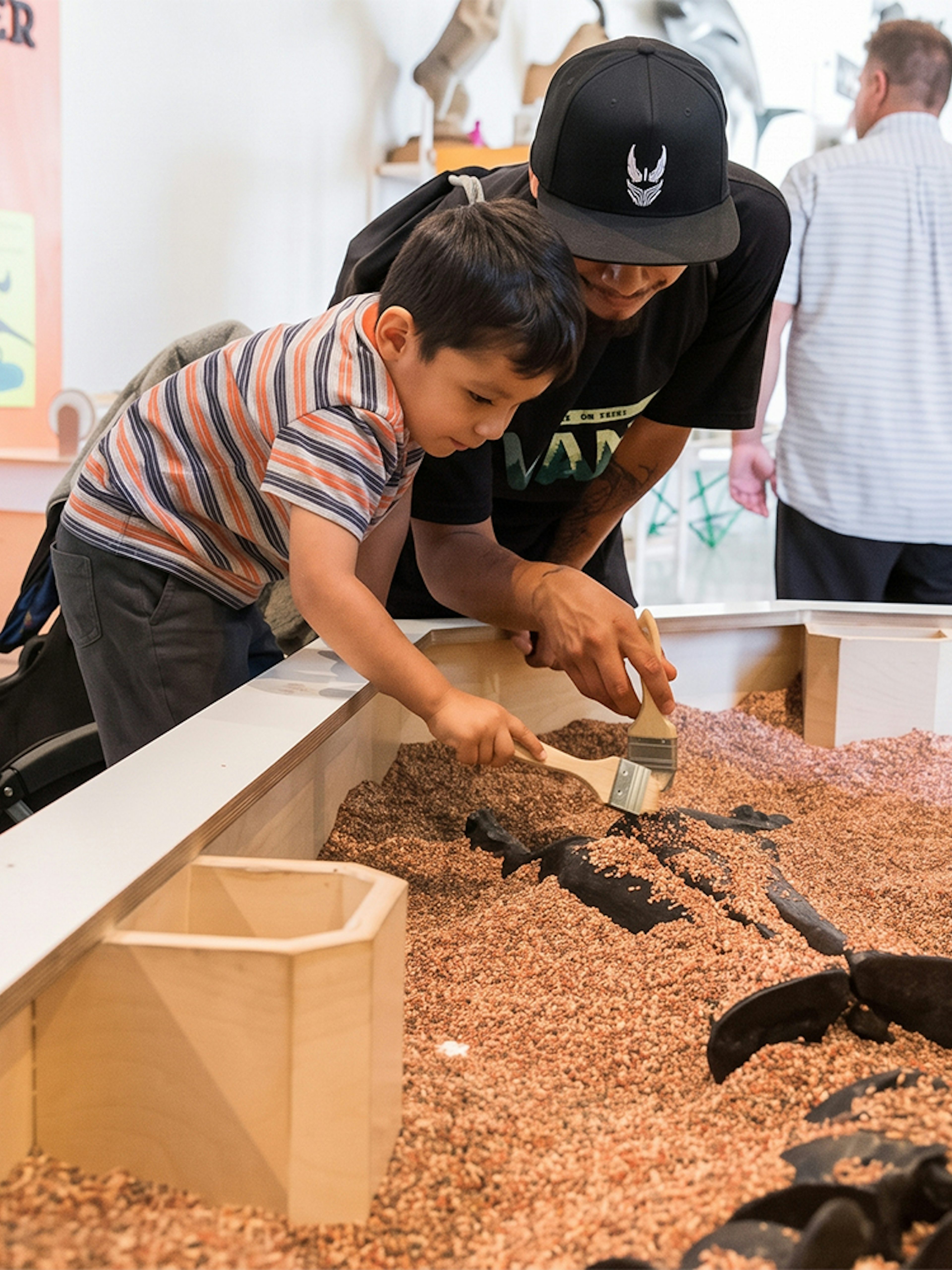
  • Unique experiences: This premium format adds real fossil preparation and storage viewing, plus scientist-led storytelling focused on the museum’s dinosaur specimens.
  • Queues & access: Prebooked entry can reduce ticket-counter waits; it does not skip security or entrance scanning at the main museum entrance.
  • When to book: Weekends, holidays, summer, and school-break dates are busiest; book opening or after 3pm for a smoother visit.
  • Good to know: Plan 2 to 4 hours; the museum is open 9:30am to 5pm, and this experience is suitable for all ages.

What to expect at Natural History Museum of Los Angeles County

Carousel item image for museum experience
1/6

Start at NHM Commons

Enter through NHM Commons, the museum’s newer indoor-outdoor wing, then pass the 75-foot Gnatalie sculpture and LA history mural. It feels open and modern before the older 1913 building takes over, setting the tone for a big, varied museum visit.

Explore world-class permanent exhibits

Discover galleries spanning dinosaurs, gemstones, wildlife, California history, and nature. You can explore the museum at your own pace, with access to its permanent exhibitions and interactive displays that bring millions of years of natural history to life.

See iconic dinosaur fossils up close

Walk beneath towering dinosaur skeletons and examine fossils that reveal Earth's prehistoric past. From massive predators to ancient plant-eaters, the Dinosaur Hall offers one of the museum's most impressive and photographed collections.

Step behind the scenes with museum scientists

Go beyond the public galleries on an exclusive insider experience led by museum staff. Visit research and collections areas where scientists prepare, study, and preserve fossils and specimens that aren't readily available on a general visit.

Discover collections hidden from public view

Peek inside working collection spaces that house millions of specimens used for scientific research. Learn how museums catalog, protect, and study everything from dinosaur bones to rare animals and cultural artifacts behind the scenes.

Explore at your own pace before or after the tour

After your guided scientist experience, continue wandering through the museum independently. Revisit your favorite galleries, browse interactive exhibits, or spend extra time in sections that capture your interest before your visit ends.

Things to know before booking your Natural History Museum of Los Angeles County tickets

Booking window

  • Book online in advance for weekends, holidays, school-break dates, and any day when a seasonal add-on is a priority.
  • Walk-up tickets may be available if slots remain, but availability can tighten on busy days. Pre-booking mainly protects your preferred entry time and reduces ticket-counter friction.
  • Weekday mornings are not always quiet here. School groups often arrive Wednesday–Friday mornings, so a timed ticket matters even outside peak tourist season.

Entrances & flow

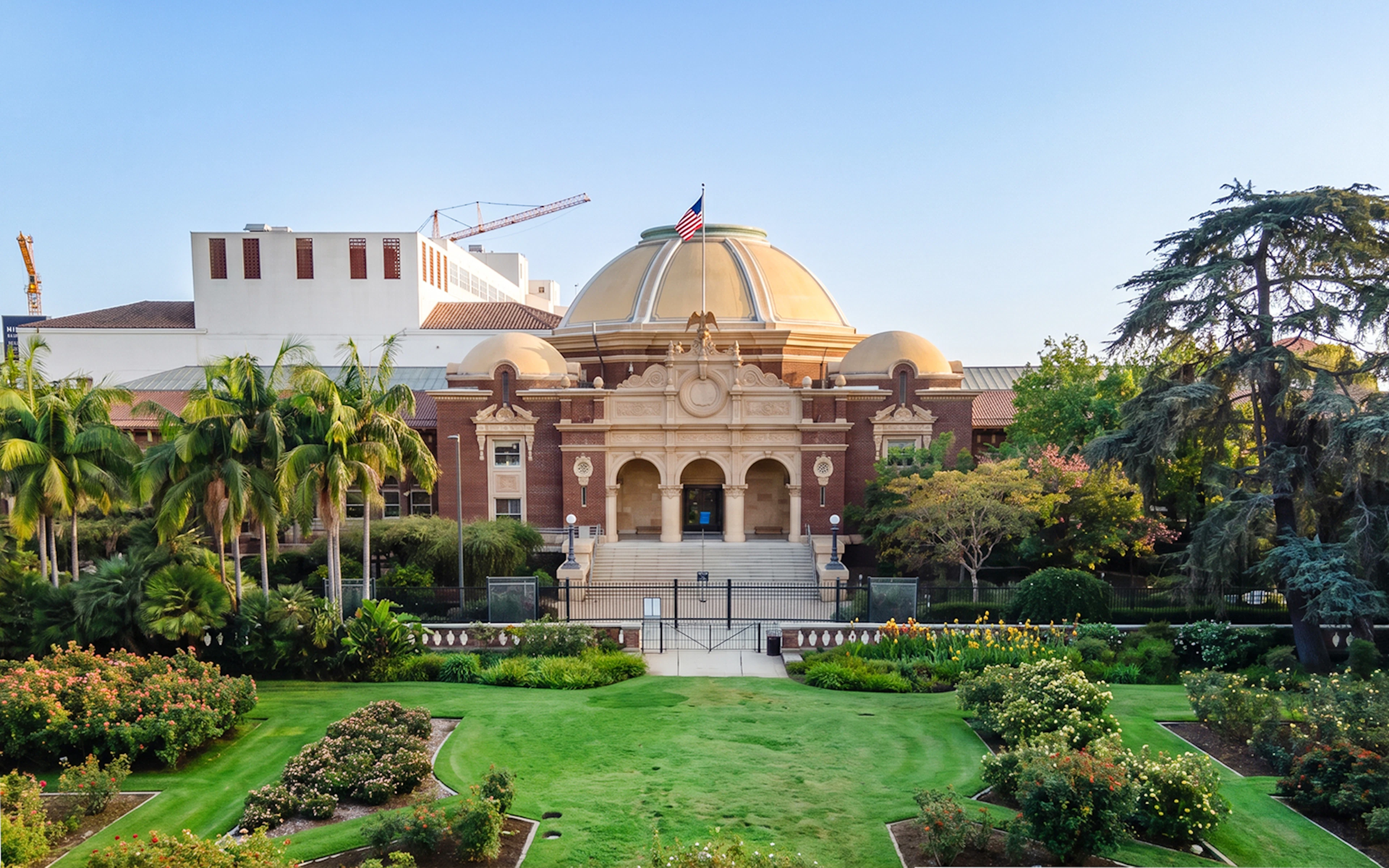
  • General visitors enter through the main north entrance facing the Exposition Park Rose Garden. Tickets are scanned at the entrance after security.
  • Online tickets skip the ticket-purchase line, not security. All visitors go through bag checks, and busy-day entry can still take about 30–45 minutes.
  • During quieter periods, entry waits are usually shorter at about 5–15 minutes. The biggest surges often happen when school buses or large groups arrive together.

What’s included

  • The admission ticket includes entry to the museum’s permanent exhibits and galleries, which cover headline spaces such as dinosaur displays, gem and mineral collections, and regional nature and history exhibits.
  • It also includes behind-the-scenes access with museum scientists. You can view real fossil preparation and storage and hear stories connected to the museum’s dinosaur specimens.
  • Additional paid experiences are not included. Seasonal special exhibits, Butterfly or Spider Pavilions, 3D films, and other separately ticketed experiences require their own ticket when available.

Ways to explore

  • The core museum visit is self-guided, so you can move at your own pace. Most visitors spend about 2–4 hours inside, with 3–4 hours giving you more breathing room.
  • The behind-the-scenes component adds structure without turning the whole visit into a fixed guided tour. It suits visitors who want extra access but still want flexibility across the main galleries.

Exhibition galleries at Natural History Museum of Los Angeles County

NHM Commons

Entry Wing: Orientation, theater, and indoor-outdoor installations

This outdoor-indoor entry wing sets the visit up with orientation displays, a theater, plaza installations, and Gnatalie. Most visitors start here before moving through the welcome center into the historic main building and first-floor permanent halls.

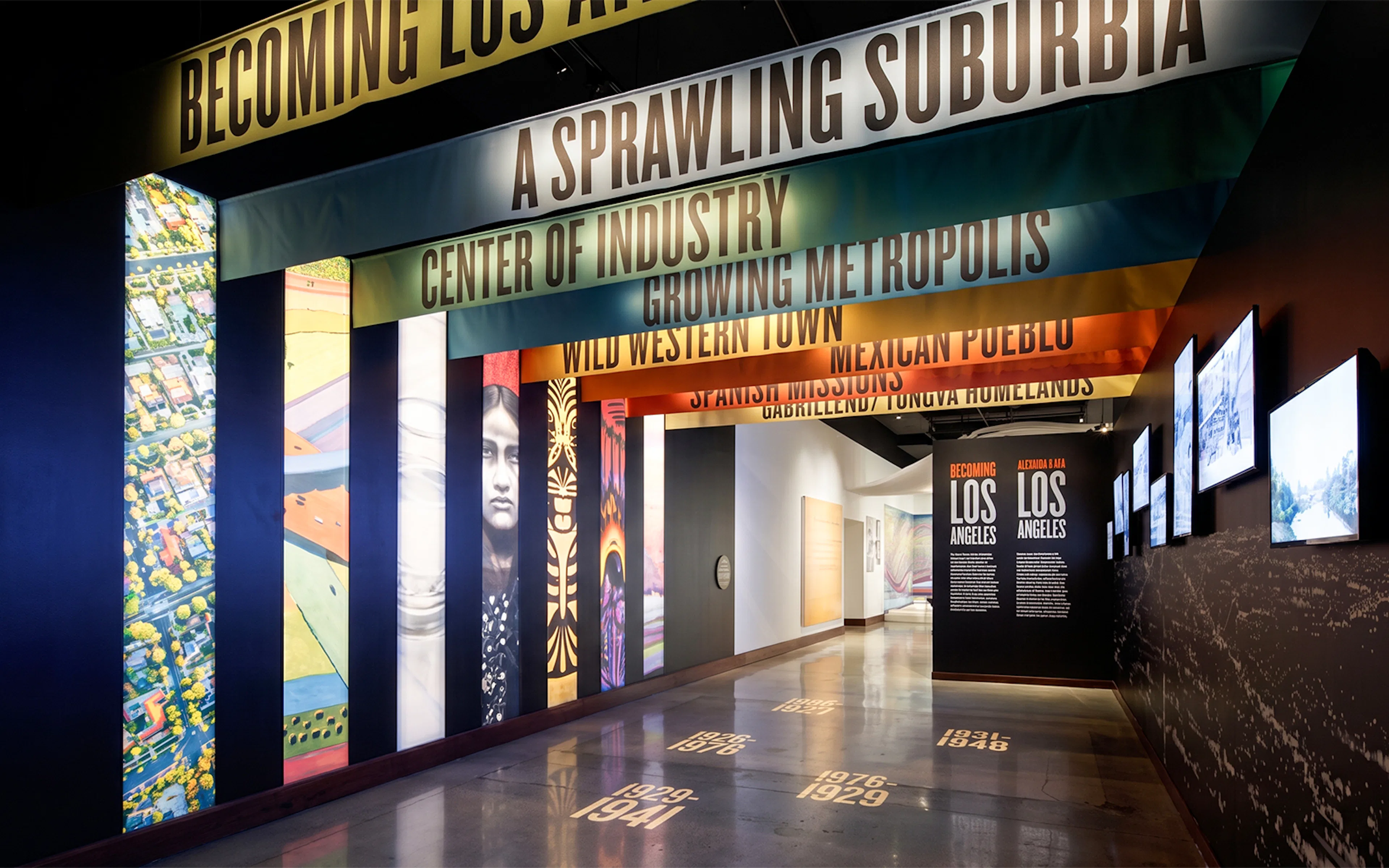
Becoming Los Angeles

Regional history, ecology, and cultural storytelling

On an upper-level route, this regional history gallery links fossils, habitats, and cultural material to Los Angeles’ growth. It works well early in the visit or after dinosaurs, giving city context before quieter nature-focused halls.

Gem and Mineral Hall

Minerals, gemstones, meteorites, and gold specimens

On the first floor, darkened cases and compact aisles group minerals, gemstones, meteorites, and gold specimens. Many visitors slot this near the start because it sits close to core circulation routes and offers a shorter, high-impact stop.

Jane Pisano Dinosaur Hall

Paleontology Gallery: Mesozoic fossils and mounted skeletons

Spanning two levels off the central rotunda, this paleontology anchor presents mounted dinosaurs and fossil narratives from the Triassic through the Cretaceous. Visitors usually head here first, then loop onward to mammals or up toward local history and bird galleries.

African and North American Mammal Halls

Mammal Dioramas: Habitat displays and traditional natural history

Surrounding the main circulation core, these traditional diorama halls gather land mammals in habitat scenes across linked rooms. They work as a mid-visit loop after dinosaurs, with slower pacing, benches, and easy branches toward birds or the lower-level labs.

Hall of Birds

Bird specimens and habitat groupings

Usually found as a quieter upstairs detour, this gallery focuses on bird specimens, habitat groupings, and regional diversity. The route feels calmer than Dinosaur Hall, making it a good follow-up when central areas are crowded.

Nature Lab

Hands-on science zone: Live animals and specimen stations

On the lower level near family spaces, this hands-on science zone mixes live animals, microscopes, and specimen stations. It breaks up the traditional halls, and many visitors drop in mid-route before continuing to the Discovery Center or back upstairs.

Discovery Center

Child-focused learning area: Interactive science activities

Close to the Nature Lab on the lower level, this child-focused area uses activity stations and touch-friendly learning zones rather than formal cases. Families often make it an endpoint or a reset stop before returning to bigger gallery halls.

Nature Gardens

Outdoor ecology area: Native plants and wildlife observation

Outside the main building, these landscaped paths extend the museum into Southern California ecology with native plants and wildlife observation. Many visitors save them for the end, using the outdoor loop as a quieter finish after the busiest indoor halls.

Must-see artifacts at the Natural History Museum of Los Angeles County

Carousel artwork image for museum exhibition
1/10

Gnatalie

This 75-foot dinosaur outside the new Commons sets the tone before you enter. Notice the open, skeletal structure that feels closer to a fossil drawing in space.

Pro tip: Step back across the plaza to take in the full length.

  • Museum installation (2022)
  • Location: NHM Commons

L.A. History: A Mexican Perspective

Carrasco’s sweeping mural ties the museum to the city beyond its walls. Scan the crowded scenes for layered stories of migration, conflict, labor, and neighborhood change.

Pro tip: View it from mid-distance so the timeline reads more clearly.

  • Barbara Carrasco (1981)
  • Location: NHM Commons

Adult T. rex

The adult anchors NHM’s rare growth series, letting you compare one predator across life stages. Notice the huge skull, deep ribs, and balanced tail.

Pro tip: Stand back far enough to compare it with the younger specimens.

  • Tyrannosaurus rex specimen (Late Cretaceous, c.67 million years ago)
  • Location: Dinosaur Hall, Levels 1–2

Juvenile T. rex

This middle stage shows how quickly T. rex changed as it matured. Compare the longer legs and lighter build with the adult nearby.

Pro tip: View it beside the adult to spot the changing proportions.

  • Tyrannosaurus rex specimen (Late Cretaceous, c.67 million years ago)****
  • Location: Dinosaur Hall, Levels 1–2

Baby T. rex

One of the hall’s biggest surprises, this tiny skeleton makes the growth series click.

Pro tip: Get close enough to see how small the bones really are.

  • Tyrannosaurus rex specimen (Late Cretaceous, c.67 million years ago)
  • Location: Dinosaur Hall, Levels 1–2

Mamenchisaurus

Its extraordinary neck stretches the scale of the hall and the imagination. Follow the vertebrae one by one to grasp how much of the body is neck.

Pro tip: Stand side-on to trace the full neck line.

  • Mamenchisaurus specimen (Late Jurassic, c.160 million years ago)
  • Location: Dinosaur Hall, Levels 1–2

Triceratops

This horned giant shows the power of late Cretaceous plant-eaters. Focus on the three facial horns and broad frill protecting the back of the skull.

Pro tip: Face it head-on to feel the impact of the horns.

  • Triceratops specimen (Late Cretaceous, c.68 million years ago)
  • Location: Dinosaur Hall, Levels 1–2

Stegosaurus

Stegosaurus still feels unfamiliar in person because the proportions are so odd. Notice the small head, arched back, and alternating plates along the spine.

Pro tip: View from the side to read the plate pattern clearly.

  • Stegosaurus specimen (Late Jurassic, c.150 million years ago)
  • Location: Dinosaur Hall, Levels 1–2

Fruitadens

Easy to miss, this chicken-sized dinosaur rewards a closer look.

Pro tip: Slow down here; its scale is the point.

  • Fruitadens specimen (Late Jurassic, c.150 million years ago)
  • Location: Dinosaur Hall, Levels 1–2

Mojave Nugget

The Gem Hall’s celebrity specimen, this massive gold nugget makes geology feel immediate. Look for its lumpy, weathered surface rather than a polished, jewel-like finish.

Pro tip: Circle it slowly to catch the changing texture and color.

  • Natural gold nugget (prehistoric)
  • Location: Gem & Mineral Hall, Level 1

Plan your visit

  • Opening hours: The museum is open daily from 9:30am–5pm.
  • Regular closure: It closes on the first Tuesday of each month from April through November.
  • Timed entry: Entry follows your selected time window, so late arrival can shorten your visit.
  • Visit length: Most visits take about 2–4 hours, depending on galleries and extras.
  • Holiday schedule: Major holiday hours can vary, so check the museum calendar before visiting.
  • Best hours: Arrive at 9:30am or after 3pm for lighter galleries and shorter entry lines.
  • Best days: Mondays and weekday afternoons are usually calmer than Saturdays, Sundays, and school-group mornings.
  • Busy periods: Summer, spring break, and holiday weeks usually bring the heaviest crowds.

Address: 900 Exposition Blvd, Los Angeles, CA 90007, United States | Find on Maps

Neighbourhood: The museum sits in Exposition Park, just south of Downtown Los Angeles.

  • Nearby landmark: Exposition Park Rose Garden (0.1 miles)
  • Closest bus stop: Exposition / Watt (2 mins)
  • Closest light rail station: Expo Park / USC (0.1 miles)
  • Restrooms: Restrooms are available on multiple floors, including family restrooms and baby-changing areas.
  • Storage: No lockers are available, so plan to carry coats, backpacks, and personal items.
  • Dining: The café in NHM Commons serves light meals, snacks, and drinks.
  • Shop: The museum shop near the exit sells books, toys, and science-themed gifts.
  • Nursing rooms: Nursing rooms are available on Levels 1 and 2.
  • Strollers: Strollers are welcome in permanent galleries, though seasonal pavilions may restrict them.
  • Entrance access: Wheelchair users can enter through the step-free main entrance facing the Rose Garden.
  • Elevators: Elevators connect all permanent exhibit floors from the Commons and main building.
  • Loans: Wheelchair users and families can borrow wheelchairs or strollers with ID.
  • Restrooms: Accessible restrooms are available on multiple levels throughout the museum.
  • Sensory support: Visitors with sensory needs can request free sensory kits at Guest Services.
  • Quiet space: A family lounge offers a quieter space during busy visits.
  • Service animals: Service animals are welcome throughout the museum.
  • Limits: Seasonal Butterfly and Spider Pavilions are not wheelchair or stroller accessible, and garden paths can be uneven.
  • Security: All visitors pass through bag checks and ticket scanning at the main entrance.
  • Bag policy: Keep bags light because no lockers are available inside the museum.
  • Photography: Personal photography without flash is usually allowed unless gallery signs say otherwise.
  • Equipment: Tripods and commercial filming require prior permission.
  • Food and drinks: Outside food is not allowed in galleries, except sealed water bottles.
  • Behavior: Please do not run, touch exhibits, or disturb live-animal areas.
  • Re-entry: Same-day re-entry is generally allowed with your original ticket; confirm the process when you arrive.

Visitor tips & guidelines

  • Don’t start in Jane Pisano Dinosaur Hall on Wednesdays to Fridays before 12 noon; school groups cluster there first.
  • Begin with Gem & Mineral Hall or Becoming Los Angeles, then loop back; the rotunda usually loosens after lunch.
  • For the T. rex growth series, stand slightly left of the juvenile mount; all three ages align more cleanly.
  • Look for Fruitadens only after the largest skeletons; the tiny specimen disappears if you keep scanning at sauropod height.
  • See the Mojave Nugget before the darker fluorescent-mineral section; people slow there, and the aisle tightens behind them.
  • Pair Becoming Los Angeles with the Hall of Birds on Level 2; it saves one full cross-building backtrack.
  • If someone in your group needs a quieter reset, use NHM Commons theater-side seating; the open layout disperses sound better.
  • Don’t stop in the Judith Perlstein Welcome Center sightline; paused groups create a bottleneck as others move into the galleries.

Frequently asked questions about Natural History Museum of Los Angeles County tickets

Yes, booking ahead is strongly recommended, especially on weekends, holidays, and school-break dates. Pre-booking helps you avoid ticket-counter waits, protects your preferred entry window, and reduces the risk of arriving when popular times have filled.